


Should I Get a New Maryland Bridge If My Dentist’s Re-Bonding Attempts Failed?
I got a Maryland Bridge in 1998 from my previous dentist in Maine. Last year, the bridge loosened, but my current dentist can’t secure it well. The bridge has fallen off four times since last September. My dentist even admitted that the bridge is well-constructed. I’m concerned that a re-bonding issue has escalated to the point where I will need a new bridge. I don’t want to be suspicious about my dentist’s intent. Should I consult another dentist before asking my dentist to replace the bridge? Thanks. James from IL
James,
A Maryland bridge can be a conservative way to replace a missing tooth. However, it only works if a dentist completes every step correctly. When a dentist struggles to keep a bridge in place, the issue is often the bonding technique.
Why Bonding a Maryland Bridge Can Be Complex
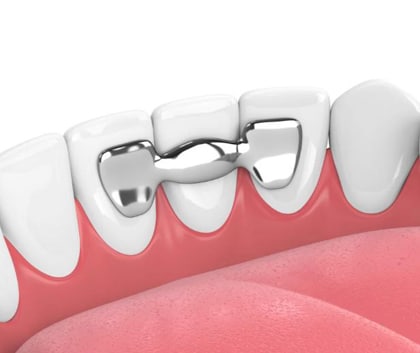
Bonding a Maryland bridge is more complex than it sounds. The process involves preparing both the tooth and the metal surface to form a strong, lasting connection.
For metal-wing bridges, proper bonding includes:
- Thoroughly cleaning the metal surfaces
- Etching the metal to create microscopic retention
- Using a durable bonding agent, such as Panavia, designed for metal
If these steps aren’t followed closely, the bond can fail.
Why Your Maryland Bridge Originally Worked
A 28-year lifespan is superb for a Maryland bridge. That tells me the original dentist handled the preparation and design correctly. When the bridge came off, the problem occurred during the re-bonding process. The metal must be re-treated before bonding again. If not, the new bond won’t hold.
How to Find a Dentist to Re-Bond Your Maryland Bridge
You want a dentist who understands this type of bonding and uses the right materials. That doesn’t happen by chance.
Before scheduling treatment, ask:
- Are you experienced with metal-bonded Maryland bridges?
- Do you use systems like Panavia for bonding metal?
- What steps do you take to prepare the metal before bonding?
You can also look for dentists affiliated with the American Academy of Cosmetic Dentistry or those with advanced training through the Academy of General Dentistry.
Dr. Thaddeus Michalski, a Rocky Hill, Connecticut dentist, sponsors this post. Read why many of his patients say he is one of the best dentists in town.
My Dentist Nicked My Dental Bridge Tooth. Is it Ruined?
I’ve been wearing a Maryland bridge since 2002 and have never had any visible issues with it. I do have a history of heavy grinding and know I should be wearing a mouth guard, but I often don’t wear it.
I had two crowns replaced in February, and my dentist adjusted my bite. As part of that, he removed a small amount from the tooth on my bridge. The next day, I noticed a silver dot showing through that area, which had never been there before.
My dentist said my teeth grinding has damaged the dental bridge, but the timing makes me question that. He placed a bonded composite over the spot, but it didn’t last, and now the metal is visible again. Will I need the bridge replaced? Thanks. Geoff from NJ
I’m worried about the condition of my bridge and whether something may have been compromised during the adjustment. I want to address this respectfully, but I’m not sure how to approach the conversation since we see the cause differently. I would appreciate guidance on what to do next.
Geoff,
We cannot see your Maryland bridge or the exposed area, but the timing strongly suggests that the bite adjustment contributed to the problem. Your dentist may be technically correct that grinding during sleep removed the final thin layer of porcelain. Still, the earlier bite adjustment likely weakened that area, making the damage possible.
Consider Getting a Second Opinion
Seeking a second opinion is a practical next step. Many cosmetic dentists provide brief second-opinion evaluations at no cost, and an independent assessment can clarify what happened.
During that visit, ask the dentist to evaluate the porcelain surface near the exposed metal. They will look for:
- Explorer marks on porcelain – A metal explorer will not mark intact glazed porcelain.
- Evidence of bur adjustment – Ground porcelain shows distinct surface markings that indicate mechanical alteration.
This information gives you confidence when discussing the issue with your original dentist. Approach the conversation calmly and without accusation. Bite adjustments exposing metal are mistakes many dentists encounter at some point in their practice.
Can the Bridge Be Repaired Instead of Replaced?
Repair may be possible. A composite placed directly on untreated metal will not bond well and usually fails quickly. A more predictable repair requires specific materials and preparation.
A proper repair would typically include:
- Creating space by carefully reducing additional metal
- Sandblasting the surface with a micro-etcher
- Priming the metal and applying an opaque metal-bonding cement such as Panavia
- Placing, shaping, and polishing a matching composite layer
Even with ideal technique, repair remains unpredictable. A dental bridge can last 15 years or more. Unfortunately, although your bridge is otherwise in good condition, replacement can be a reliable long-term solution for the damage experienced.
Dr. Thaddeus Michalski, a Rocky Hill, Connecticut dentist, sponsors this post. Read why many of his patients say he is one of the best dentists in town.